Protect equipment before severe weather arrives
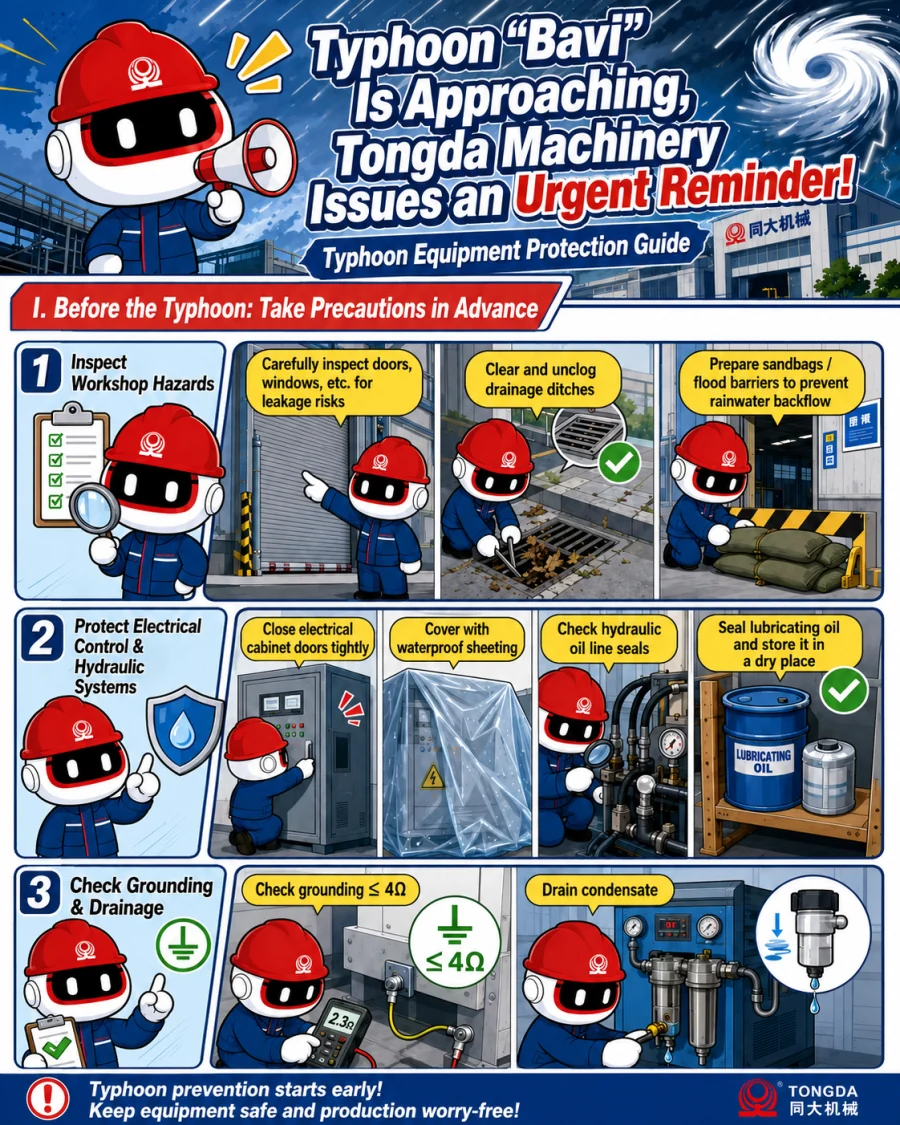
Heavy rain, wind, and possible flooding can affect workshop access, electrical systems, hydraulic components, and stored materials. A clear preparation plan helps keep equipment protected and makes post-storm recovery more controlled.
- Inspect workshop doors, windows, roof openings, and drainage routes for leakage or blockage risks.
- Clear drainage ditches and prepare sandbags or flood barriers where rainwater may enter the workshop.
- Close electrical cabinet doors, protect control equipment with waterproof sheeting, and check hydraulic oil line seals.
- Confirm grounding resistance is within the required range and drain condensate where applicable.
During the typhoon: isolate power and protect critical systems
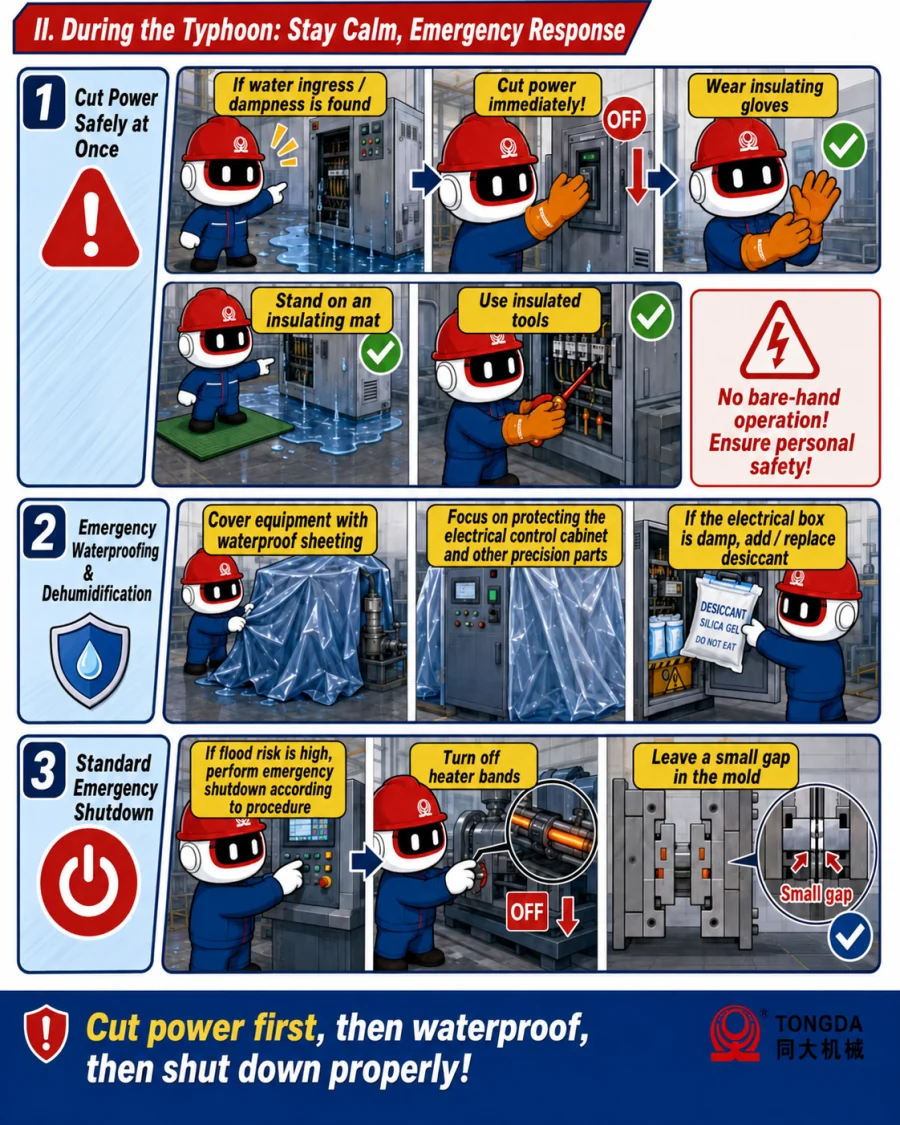
If water ingress, dampness, or abnormal conditions are found, prioritize personnel safety and isolate the equipment correctly. Do not operate electrical controls with bare hands or attempt to restart machinery before the area is safe.
- Cut power immediately when water ingress or abnormal dampness is present, and use insulating gloves and tools where required.
- Cover the machine, electrical cabinet, and other precision components with waterproof material.
- Use desiccant in damp electrical enclosures and keep the control area as dry as possible.
- When shutdown is necessary, turn off heater bands and leave an appropriate protection gap in the mold.
After the typhoon: inspect carefully before restarting
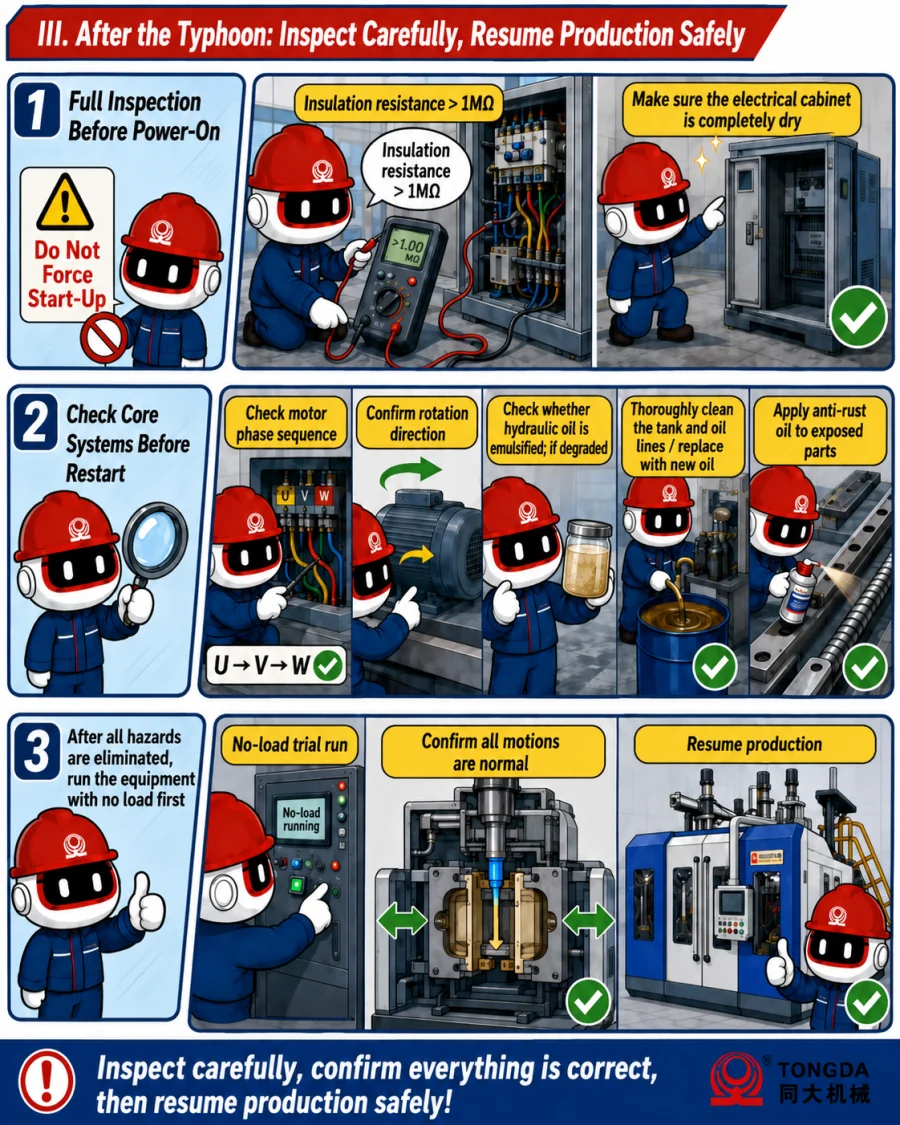
Do not force a restart after severe weather. A systematic inspection helps confirm that electrical, hydraulic, and mechanical systems are dry, safe, and ready for normal operation.
- Check insulation resistance before power-on and make sure electrical cabinets are completely dry.
- Verify motor phase sequence and rotation direction, then inspect hydraulic oil for water contamination or emulsification.
- Clean standing water and moisture from tanks and oil lines, replacing fluids if contamination is found.
- Apply anti-rust oil to exposed parts, run the equipment with no load first, and resume production only after all movements are confirmed normal.