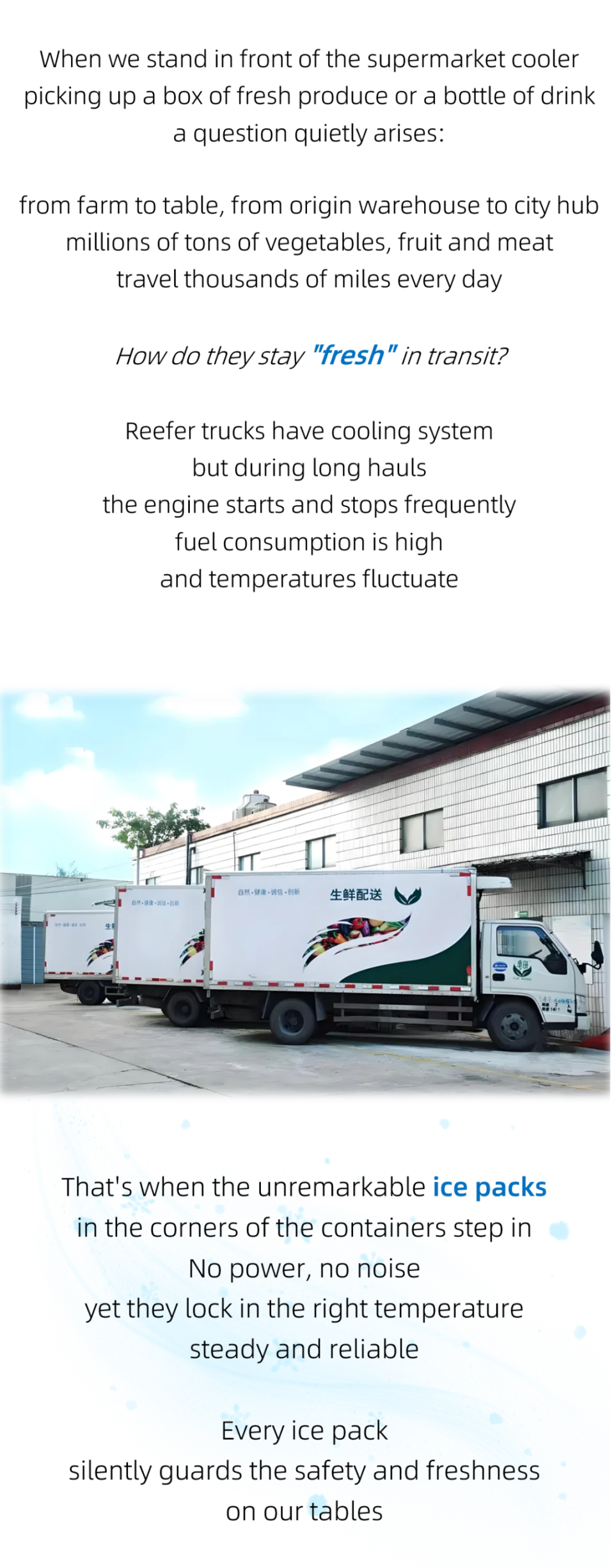
A compact cold reserve for the supply chain
In a cold-chain delivery, a few degrees can make a meaningful difference. An ice pack may be small, but it functions as a portable reserve of cooling capacity inside insulated boxes, refrigerated vehicles, and temperature-controlled containers.
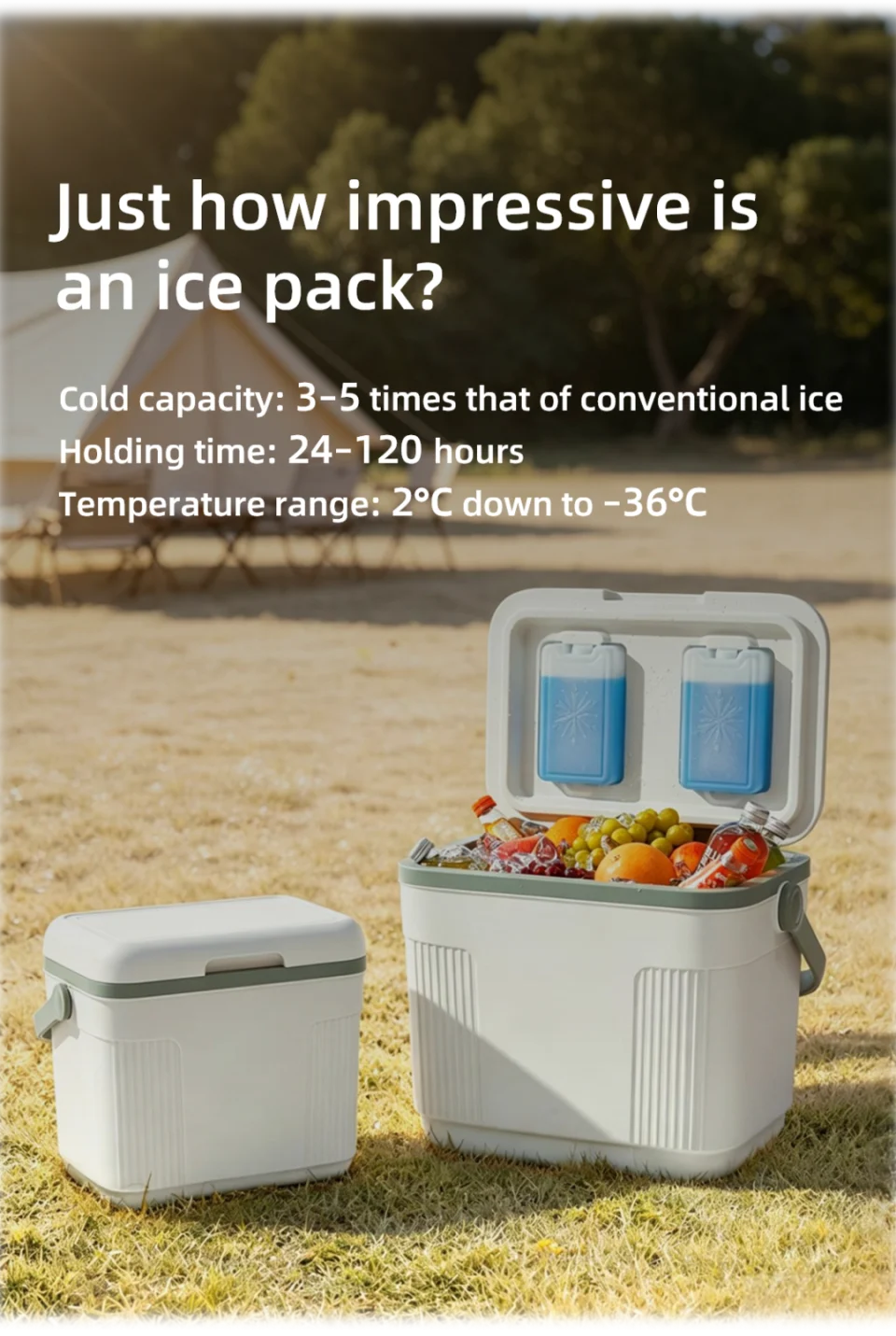
Depending on the formulation and application, ice packs can provide three to five times the cooling capacity of conventional ice, hold temperatures for around 24 to 120 hours, and support temperature ranges from 2°C down to −36°C.

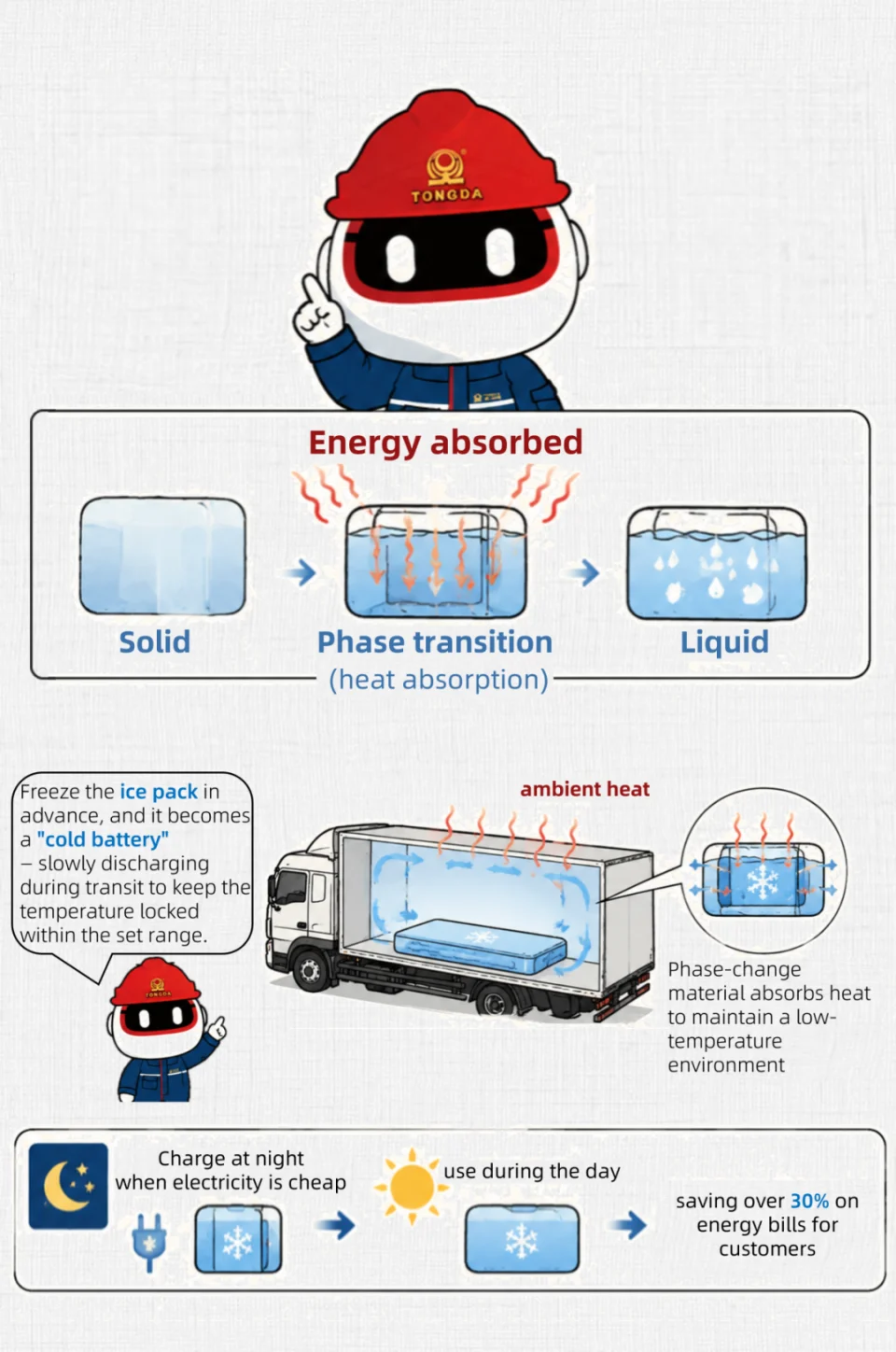
Why phase-change materials matter
The core of a high-performance ice pack is its phase-change material. After being frozen in advance, it absorbs heat as it changes phase and releases its stored cooling gradually—much like a rechargeable cold battery. This helps keep the target space within its designed temperature range instead of allowing rapid temperature swings.

Reliable performance starts with the pack
A useful ice pack must do more than stay cold. Its sealed shell needs to protect the contents, withstand repeated freezing and handling, and deliver consistent cooling without leaks or cold loss. The choice of material, wall-thickness control, sealing design, and production consistency all matter.

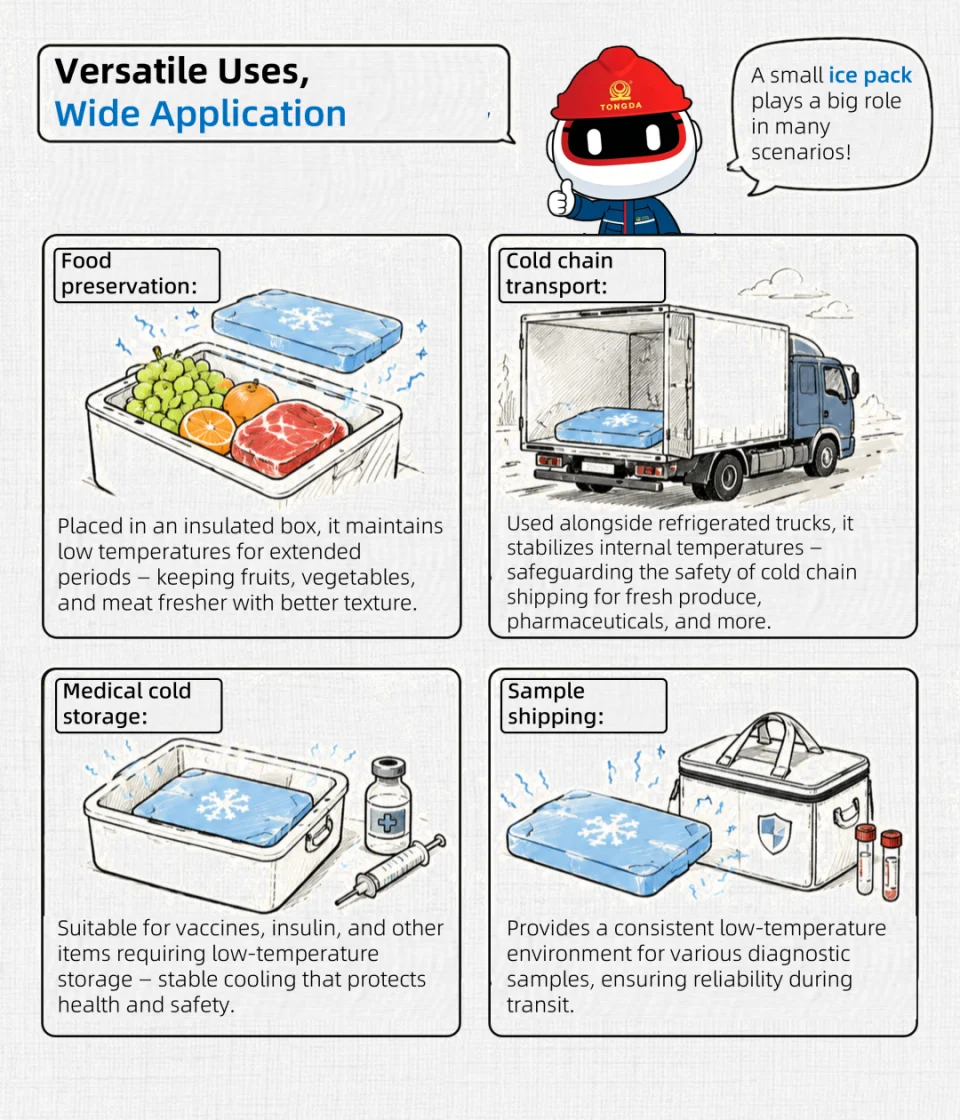
- Food preservation for fruit, vegetables, meat, and other fresh products
- Cold-chain transport for temperature-sensitive goods
- Medical cold storage for vaccines, insulin, and other healthcare products
- Sample shipping for diagnostic and laboratory materials
From ice-pack concept to blow-molded product
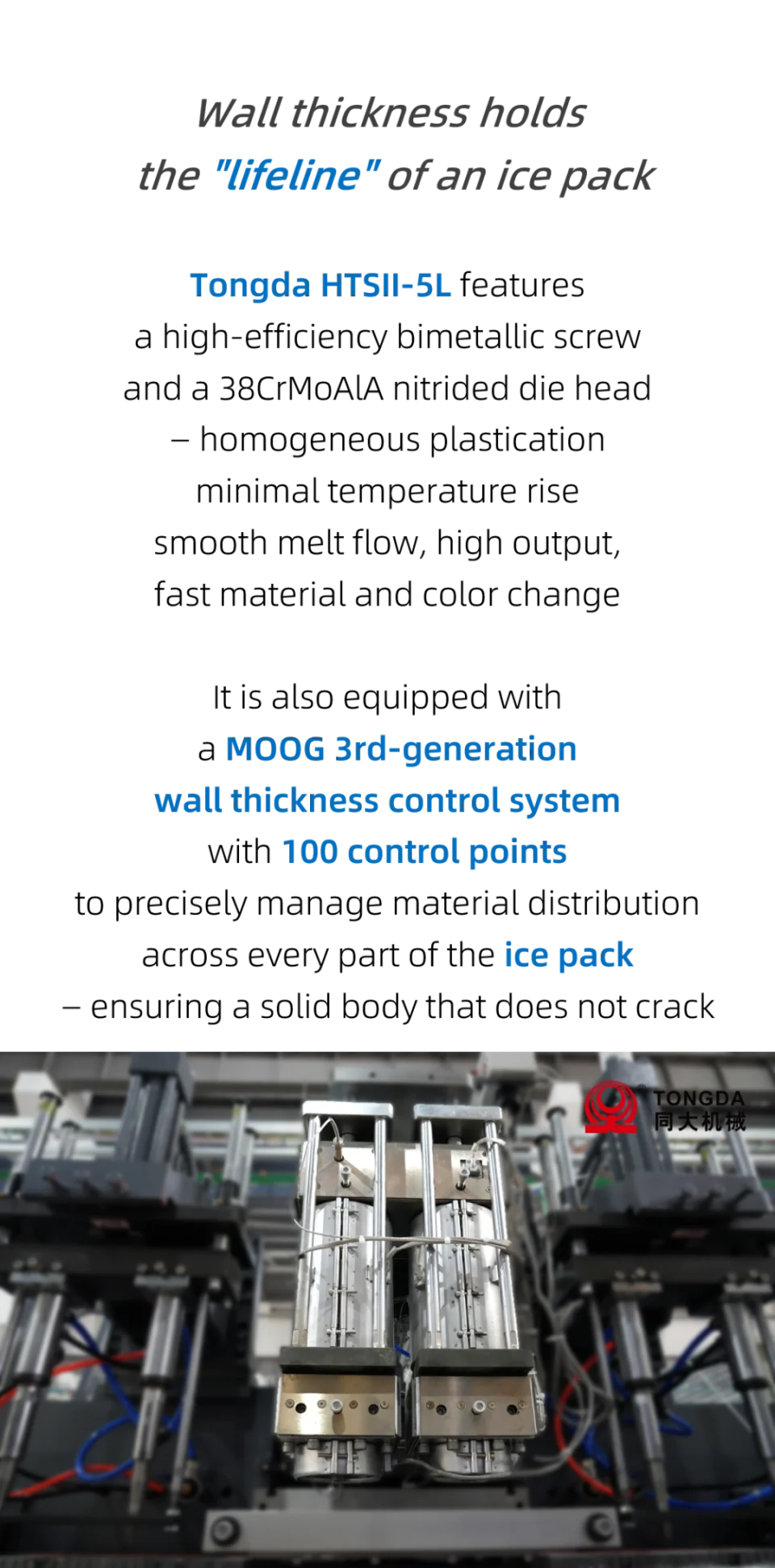
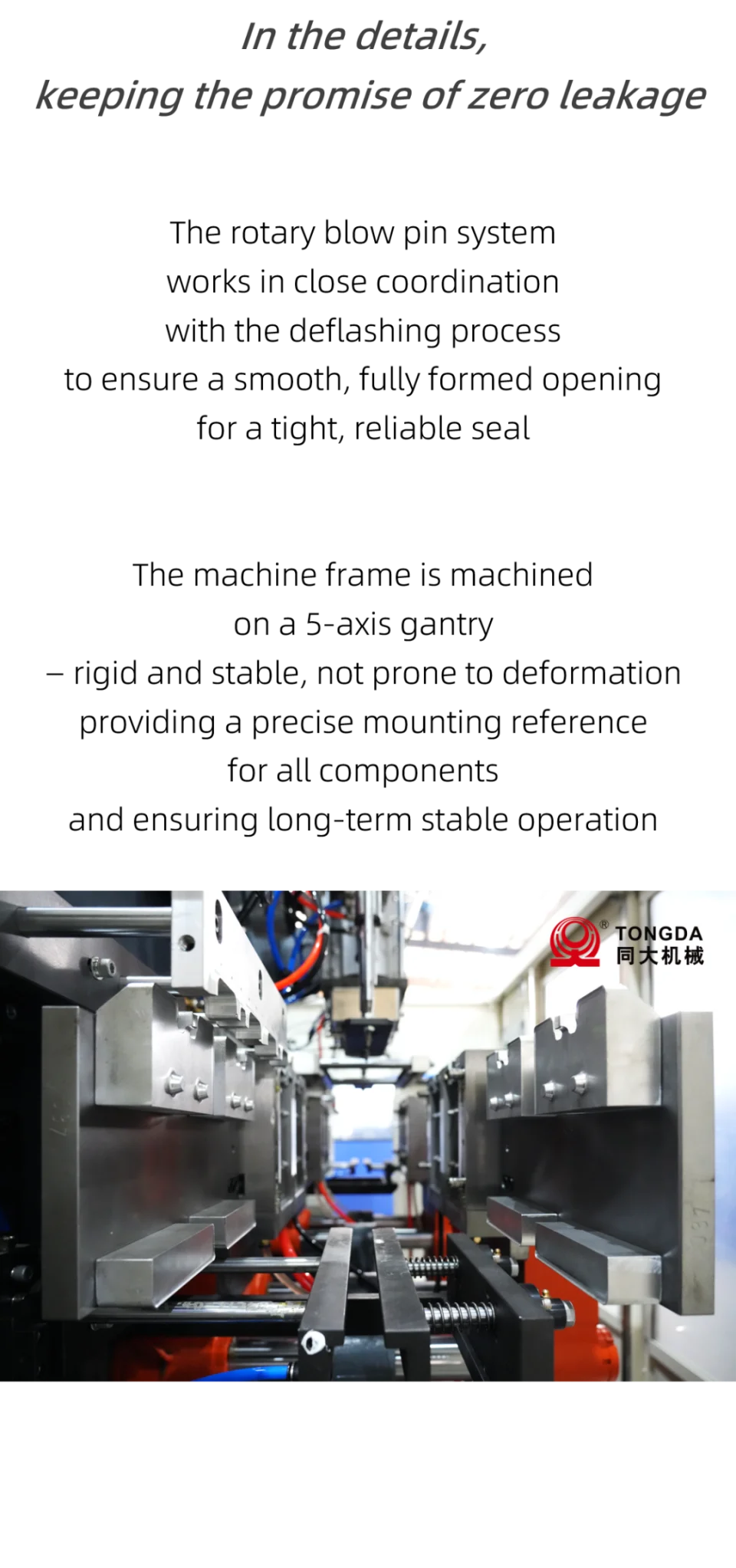
Ice-pack manufacturing depends on a container that is repeatable, durable, and efficiently produced. Tongda's HTS II-5L solution is designed for this type of small hollow-product application, combining precise wall-thickness control with stable, repeatable blow-molding operation.

Adapted from Tongda Machinery's official WeChat article, published 13 August 2026. Performance figures and applications shown here should be evaluated against the selected pack formulation, logistics conditions, and product requirements.